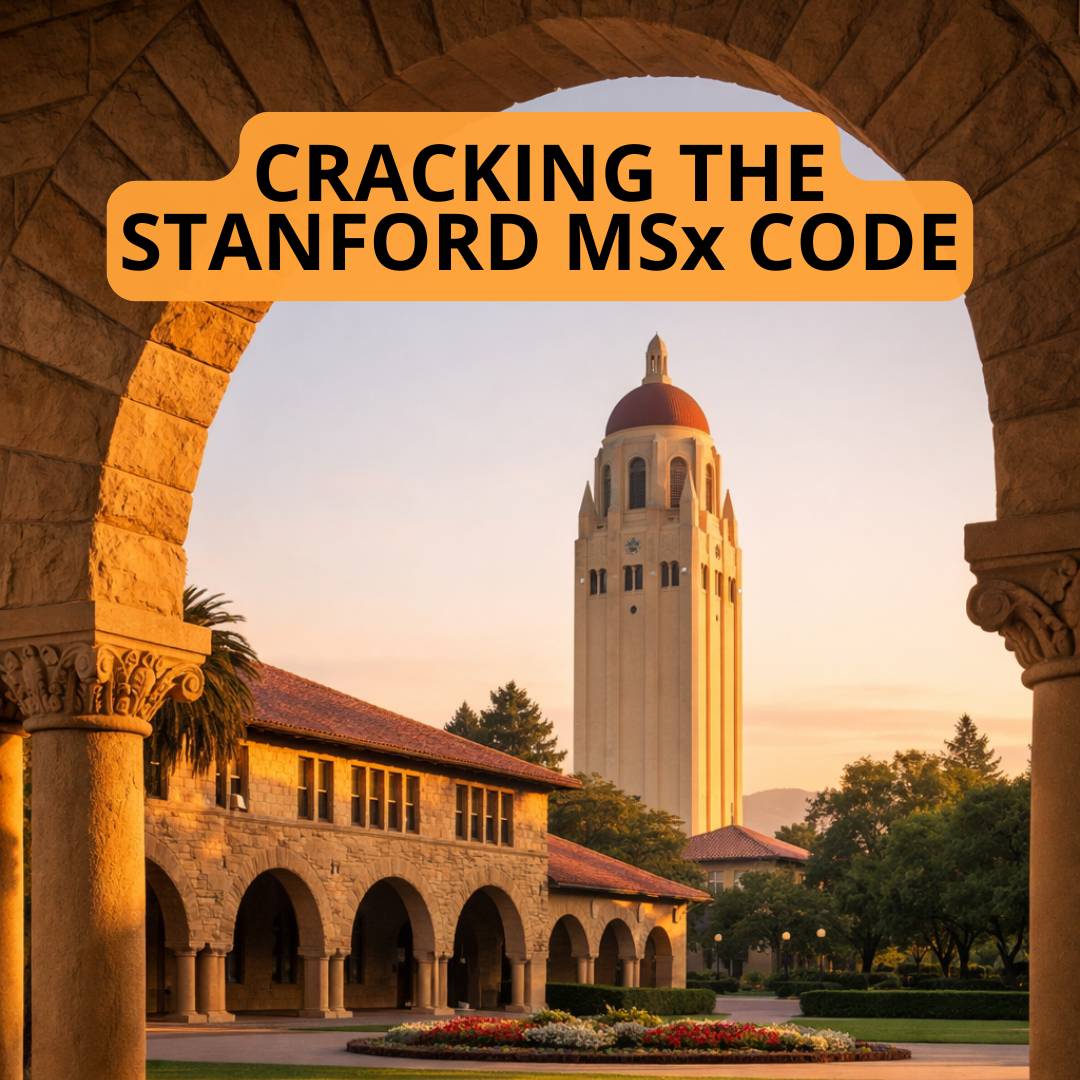
The Stanford Master of Science in Management for Experienced Leaders (MSx) is a unique beast in the world of business education. It is not simply "an MBA for older people." It is an intense, one-year accelerator designed for mid-career professionals—typically with eight or more years of experience—ready for a pivot of significant magnitude.
As a Sloan Fellow, you join a legacy dating back decades. The admissions committee isn't just looking for impressive resumes; they are curating a cohort of 90 diverse, accomplished individuals who will shape the global business landscape.
Getting in requires more than high stats. It demands profound self-reflection and a demonstration of what Stanford calls "intellectual vitality." Based on insights from admissions officers, successful alumni, and deep-dive forums, here is the definitive guide to navigating the classic questions and hidden hurdles of the Stanford MSx application.
Part 1: The Written Application—Defining Your Core
Before you ever speak to an interviewer, you must pass the written test. Stanford’s essays are notorious for requiring applicants to strip away corporate jargon and reveal their authentic selves.
The "Holy Grail" Question: Essay A
"What matters most to you, and why?"
This is perhaps the most famous question in graduate admissions. It is the gatekeeper.
The Reality:
The admissions committee already has your resume; they know what you did. This essay is about who you are.
The Trap:
Many applicants write generic essays about "making an impact" or "family." While true, these are insufficient unless backed by deep, personal causality.
The Insider Tip:
You need to peel back the layers to find the pivotal moments that formed your values. The common forum advice is the "Hallway Test": If you dropped this essay in a hallway without your name on it, would your best friend immediately recognize it as yours? If it could have been written by anyone else with your job title, it is a failure. Vulnerability wins here; polished perfection feels suspicious.
The Strategic Pivot: Essay B
"Why Stanford MSx, and why now?"
Unlike the standard MBA "Why Stanford" essay, the MSx version demands sharper focus due to the program’s abbreviated twelve-month timeline.
The Reality:
The committee needs to know why you need this specific program at this exact inflection point in your life.
The Trap:
Being "exploratory." You do not have two years to find yourself.
The Insider Tip:
AdCom members emphasize that clarity is non-negotiable. You need a strong hypothesis for your post-MSx career before Day One. Furthermore, you must articulate why the MSx cohort (seasoned executives) is the right environment for you, as opposed to the younger energy of a standard MBA class.
Part 2: The Interview — The Authenticity Test
If invited to interview, you have cleared a major hurdle. The interview, often conducted by an admissions officer or a carefully selected alumnus, is designed to test the narrative you presented in your essays.
The "Big Three" Anchors
Almost every interview will turn on these fundamental questions. You must have airtight, compelling answers.
- Why MSx specifically? (Why not an Executive MBA where you keep your job? Why not a standard MBA?)
- Why Stanford? (Move beyond "Silicon Valley ecosystem." Name relevant professors, labs, or centers like the Center for Entrepreneurial Studies that are critical to your goals.)
- Why Now? (Why is this the absolute necessary year for you to step out of the workforce?)
The Behavioral Deep Dive
Because MSx students are experienced, interviewers use behavioral questions to predict future leadership by examining past actions. They are looking for evidence of mentorship and influence.
- "Tell me about a time you mentored or developed a colleague." (Crucial for senior leaders).
- "Tell me about a time you had to lead without formal authority."
- "Tell me about a time a team you led failed." (They want to see resilience and ownership, not blame-shifting).
The Curveballs
Be prepared to think on your feet and demonstrate expertise.
- "Introduce yourself to your future classmates in 30 seconds."
- "What is the biggest challenge currently facing your industry?" (You are expected to be an expert in your field).
- "What is one thing about you that isn't in your application?"
Part 3: Insider Intelligence From the Trenches
Gleaning insights from official admissions events and the "whisper network" of forums like GMAT Club and Reddit reveals several crucial unspoken rules.
1. Intellectual Vitality is Paramount
Stanford is an academic institution first. They want students who are genuinely curious, not just transactionally focused on their next salary bump. In your application, discuss ideas you have wrestled with, not just deals you have closed.
2. The "Humble-Brag" Warning
Alumni interviewers frequently note their distaste for arrogance. The MSx program is small and collaborative. A common piece of forum advice: "Don't sell yourself like it's a job interview; share yourself like it's a first date." They are assessing if they want to sit next to you for a year.
3. The "Guava" Factor
Because MSx students are older, many bring partners and families to campus (affectionately nicknamed "Guavas"). Mentioning how your family plans to integrate into the community shows you have done your homework and understand the unique culture of the program.
4. Contribute, Don't Just Consume
Admissions officers often remind applicants that as a Sloan Fellow, you are part of a legacy. They want to know what you will bring to the table. How will your twelve years of specialized experience elevate the learning of the person sitting next to you?
The Final Word
The application process for the Stanford MSx is grueling, but it is also designed to be rewarding. It forces the kind of deep introspection that mid-career professionals rarely get time for. If you can articulate what truly drives you, define exactly where you are going, and prove why Stanford is the only bridge between the two, you might just crack the code.
How Brujo Method Helps
Preparing for MBA interviews?
Strong test scores will get you an interview. Your answers are what convert it into an offer.


Ready to kickstart your exam preparation?
El Brujo Method has a proven track record helping students get accepted to leading universities, business schools and specialized programs.
 Made with Scene.io