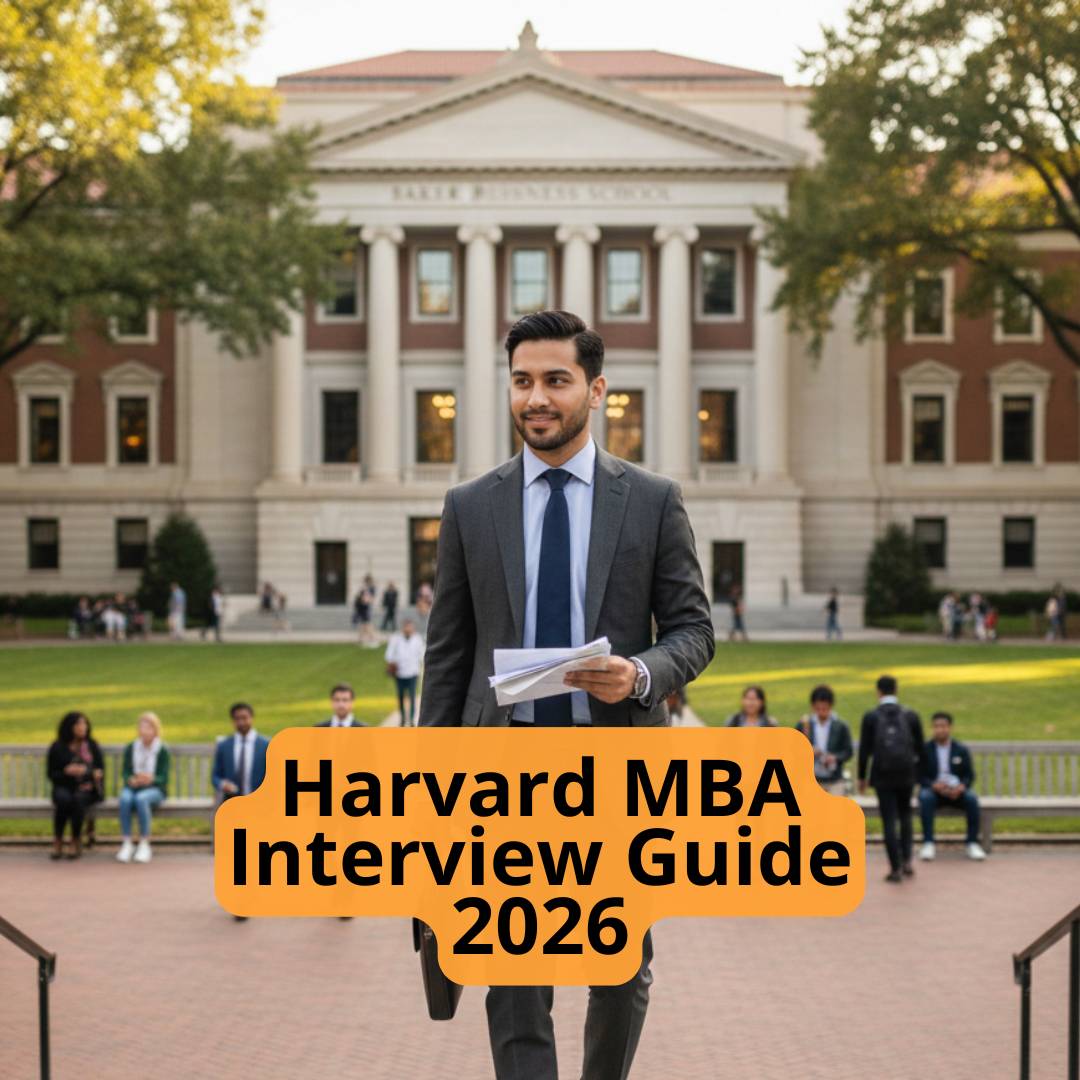
Getting invited to interview at Harvard Business School (HBS) is a huge milestone — it means your application already impressed one of the most selective MBA programs in the world. But now comes the next challenge: turning that invite into an acceptance. In this guide, we’ll walk you through what to expect, common questions, how interviewers evaluate candidates, and practical coaching tips to help you perform with confidence.
What Makes the HBS Interview Unique?
Harvard’s MBA interview isn’t a casual conversation — it’s a fast-paced, application-based discussion designed to understand how you think, how you make decisions, and how you will contribute to the HBS community.
Here’s what makes it different:
• The interview typically lasts exactly 30 minutes, and interviewers often move quickly through many questions.
• Interviewers know your application in detail and tailor questions around your background and decisions.
• There is a post-interview written reflection due within 24 hours, and it is an evaluated part of the process.
• Your overall behavior during the visit or virtual process matters — professionalism and interpersonal conduct are noticed.
Whether the interview is on campus, in a hub city, or online, the expectations remain the same.
How the Interview Works
Who interviews you?
Usually, a member of the HBS Admissions Board, sometimes with another staff member observing.
Where does it take place?
• On campus
• In major international cities
• Or virtually
Format
A structured, focused 30-minute conversation with no breaks.
Post-Interview Reflection
Within 24 hours, you must submit a short written reflection (typically 300–450 words). This is your opportunity to clarify or expand on points discussed in the interview.
What Interviewers Are Really Evaluating
HBS interviews are less about rehearsed answers and more about understanding:
• Why you made certain career decisions
• How you approach leadership and challenges
• How you think under pressure
• Your level of self-awareness
• Your potential contribution to the HBS classroom and community
Interviewers often probe deeply into your decisions, motivations, and lessons learned.
Common Harvard MBA Interview Questions
While questions vary by candidate, the themes below appear frequently.
Career Story & Motivation
• Walk me through your resume.
• Why did you make certain career transitions?
• Why pursue an MBA now?
• Why Harvard?
Self-Reflection
• Tell me about a failure.
• What is a misconception people have about you?
• What feedback have you received that surprised you?
Leadership & Impact
• Describe a time you led a team.
• Tell me about managing conflict.
• How has your leadership evolved?
Industry & Perspective
• What could your company or industry do better?
• Who do you admire professionally and why?
Because questions are often personalized, candidates should prepare stories across multiple situations rather than memorize answers.
Structuring Strong Answers
Even though the HBS interview is conversational, structured storytelling helps keep answers clear.
A helpful approach is the STAR method:
- Situation — Set context briefly
- Task — Explain your responsibility
- Action — Describe what you specifically did
- Result — Share outcomes and lessons learned
The goal is clarity and reflection, not long storytelling. Interviewers value concise, thoughtful responses.
Coaching Tips for Preparation
Practice Conversations, Not Scripts
Mock interviews help build comfort and spontaneity. Avoid memorizing answers.
Know Your Own Story Deeply
Be prepared to explain why you made each important career decision.
Show Presence, Not Perfection
Interviewers appreciate authenticity and thoughtful conversation more than flawless responses.
Write the Reflection Quickly
Draft your post-interview reflection while the experience is fresh to ensure authenticity and detail.
Final Thoughts
The HBS interview is your chance to show the person behind the application. Preparation should focus on clarity, self-awareness, and thoughtful storytelling rather than rehearsed performance.
Candidates who succeed typically demonstrate strong reflection, clear decision-making, leadership potential, and genuine curiosity.
How Brujo Method Helps
Preparing for MBA interviews?
Strong test scores will get you an interview. Your answers are what convert it into an offer.
Official Sources & Further Reading


Ready to kickstart your exam preparation?
El Brujo Method has a proven track record helping students get accepted to leading universities, business schools and specialized programs.
 Made with Scene.io